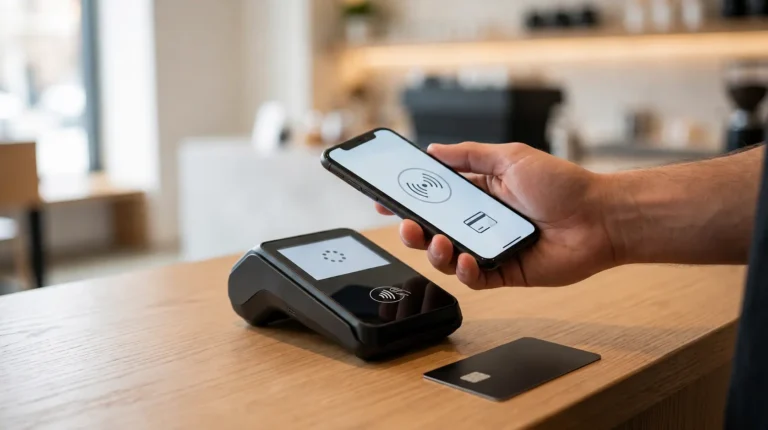
The financial landscape has evolved immensely recently, bringing forth a new era of convenience and security. Long gone are bulky wallets, as credit cards now integrate seamlessly with cutting-edge digital ecosystems to facilitate instant purchases worldwide. This shift makes everyday commerce significantly smoother for everyone.
Contactless and near-field communication
Tapping to pay revolutionized habits, letting individuals finalize transactions in seconds. This technology relies on radio frequency identification to establish a secure connection between the physical plastic and the merchant’s terminal. It completely removes the friction of traditional checkout experiences. Consumers embrace this modern simplicity wholeheartedly.
Shoppers no longer insert chips or swipe magnetic stripes, drastically reducing time spent waiting in checkout lines. Such efficiency benefits busy customers and store owners aiming to serve more people quickly. Faster service ultimately leads to much higher customer satisfaction rates. Overall productivity improves significantly during peak hours.
Security remains a top priority within this tap-and-go ecosystem, utilizing dynamic encryption for every single purchase. Because the generated code is unique each time, thieves cannot easily intercept the transmitted data for fraudulent activities. This invisible shield provides immense confidence during everyday shopping.
Mobile wallets take this concept further by storing digital versions of traditional credit cards directly on smartphones. Users can leave physical billfolds at home, relying entirely on smart devices to handle daily expenses effortlessly. Carrying just a phone is now entirely feasible and highly practical. Digital convenience is truly unmatched today.
Wearable gadgets like smartwatches also employ these proximity sensors to grant users unparalleled financial mobility. Paying for morning coffee after a jog requires nothing more than a quick flick of the wrist. Such seamless integration turns any accessory into a powerful purchasing tool. Active lifestyles benefit immensely from this innovation.
Biometric authentication methods
Verifying identity through physical characteristics offers a robust defense against unauthorized access to financial resources. Fingerprint scanners built directly into the plastic body of the card represent a fascinating leap forward in fraud prevention. Only the true owner can successfully authorize these secure payments. This hardware innovation ensures that stolen cards are essentially worthless to thieves.
When a buyer places their thumb on the designated sensor during a transaction, the embedded chip instantly confirms a match. This eliminates the need for memorizing cumbersome personal identification numbers that are easily stolen. Forgetting a passcode is no longer a stressful shopping obstacle. Checkout becomes a much more relaxed and confident experience for everyone.
Facial recognition makes significant waves within the broader ecosystem of digital wallets and banking applications. A quick glance at a smartphone screen is often all it takes to authorize a substantial transfer of funds securely. Advanced lenses capture facial contours to prevent spoofing with photographs. This deep level of scanning guarantees that your identity remains exclusively yours.
Biological signatures are incredibly difficult for criminals to replicate, unlike traditional passwords or signature verifications. Consumers gain immense peace of mind knowing their hard-earned money remains protected by their own unique physical traits. Hackers simply cannot steal what is fundamentally part of your body.
Widespread adoption of these bodily verification techniques could eventually render the classic signature slip completely obsolete. Financial institutions continue heavily investing in refining these systems, aiming to balance stringent security and user convenience. The future of banking depends entirely on these personalized security measures.
Virtual account numbers
Online shopping introduces specific vulnerabilities, since sharing permanent account details with multiple websites increases data breach risks. Temporary digital aliases provide an elegant solution by masking true underlying information during internet-based checkout processes. This extra layer keeps primary banking details completely hidden from merchants.
These randomly generated sequences function exactly like standard credit cards, often tied to specific merchants or tight spending limits. If hackers breach a retail database, the stolen digits become entirely useless for further unauthorized exploitation. Crooks hit a dead end before they can steal any funds. This proactive defense mechanism keeps your primary bank account completely untouched.
Subscription management becomes significantly easier when utilizing these single-use or merchant-locked numerical combinations. Consumers can instantly cancel a specific virtual alias to stop unwanted recurring charges without affecting their primary banking operations. Regaining control over monthly expenses has never been this straightforward.
Modern banking applications allow users to instantly generate these disposable details directly from their mobile dashboards. The process is completely frictionless, granting immediate access to a secure payment method for any impromptu online purchase. It takes only a few taps to create a secure token. This incredible accessibility puts advanced financial security right at your fingertips.
Businesses also appreciate this mechanism because it effectively reduces the overall volume of chargebacks and fraud disputes they must handle. A safer online commerce environment fosters greater trust and encourages more frequent internet economic activity. Everyone involved in the digital marketplace benefits from reduced financial risks.
Artificial intelligence in fraud detection
Behind the scenes, sophisticated algorithms constantly monitor spending patterns to identify suspicious anomalies in real time. Intelligent systems learn consumer behaviors, establishing a baseline of normal purchasing habits for every individual account holder. Any deviation from this established norm triggers an immediate internal security alert.
If an unusual transaction suddenly occurs in a foreign country, neural networks immediately flag the activity for review. Sometimes, it automatically declines the purchase until legitimate owners confirm their identity through text messages. This rapid intervention prevents substantial monetary losses before they even happen.
Machine learning models analyze thousands of data points within milliseconds, evaluating merchant categories, time, and location simultaneously. This deep analysis occurs long before the payment terminal even prints the final receipt, ensuring maximum protection. Computers process this vast information faster than any human possibly could.
Integrating artificial intelligence significantly reduces false positives, which used to frustrate travelers and avid shoppers frequently. Legitimate transactions are rarely blocked nowadays, as software easily distinguishes between actual theft and a sudden vacation. Cardholders can explore the globe without fearing unexpected financial lockouts anymore.
Banks employ massive data sets to continuously train these predictive engines, staying one step ahead of increasingly sophisticated cybercriminals. This invisible shield of code works tirelessly to secure billions of credit cards circulating globally today. As technology evolves, these automated defenses will only grow much stronger.
Blockchain and decentralized finance integration
Emerging distributed ledger networks are slowly weaving into traditional banking infrastructure to enhance settlement speeds. By leveraging decentralized protocols, cross-border payments can be finalized in minutes rather than taking several cumbersome business days to clear. International trade benefits enormously from these swift and reliable digital transfers.
Some forward-thinking companies offer plastic options allowing consumers to spend cryptocurrency holdings at everyday retail locations. The underlying system automatically converts digital assets into local fiat currency when the checkout terminal is activated. This effectively bridges the gap between modern virtual tokens and traditional daily commerce.
Smart contracts could eventually automate reward distributions, granting loyalty points or cashback incentives with absolute transparency and immediate execution. This eliminates typical waiting periods associated with monthly statement cycles, rewarding shoppers for their patronage. Customers feel more valued receiving their rightful bonuses instantly.
Decentralized identity verification presents another fascinating application, potentially giving users complete sovereignty over their personal financial data. Instead of trusting a single centralized database, identity proofs scatter securely across thousands of independent nodes worldwide. This distributed architecture makes massive data leaks practically impossible to execute.
While mainstream adoption of cryptographic frameworks is still maturing, the foundational shift is undeniable and rapidly accelerating. Converging conventional credit cards with decentralized networks promises a future where global commerce is borderless, inclusive, and efficient. Financial inclusion will skyrocket as these innovative tools reach developing nations.