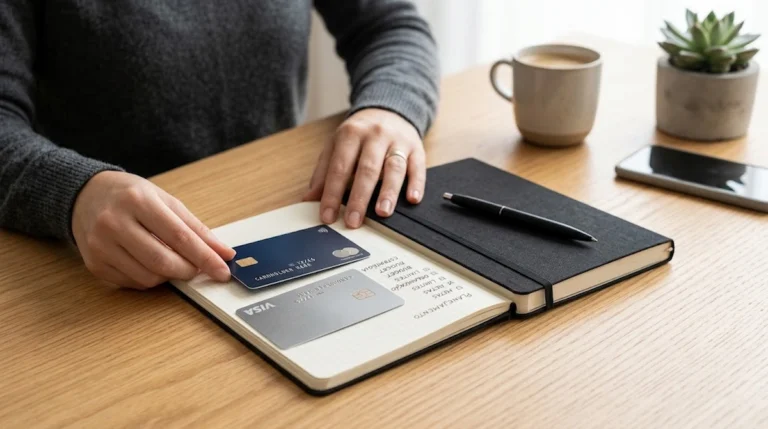
Not every household expense arrives on a predictable schedule. Annual subscriptions, school supplies, vehicle maintenance, travel reservations, and seasonal purchases can create temporary pressure on a monthly budget. A credit card can provide payment flexibility for these situations, provided the expense remains compatible with the consumer’s ability to repay it.
The key is to distinguish timing from affordability. A credit card can change when money leaves a checking account, but it does not make an expense disappear. Used thoughtfully, this flexibility can help organize irregular costs without turning them into persistent revolving debt.
Planning around uneven expenses
Monthly budgets often focus on recurring costs such as rent, utilities, groceries, and transportation. Irregular expenses can be easier to overlook because they may occur only a few times each year.
Creating a separate category for non-monthly expenses can make these costs more predictable. A consumer might estimate annual expenses and divide the total across twelve months, setting aside a portion regularly.
This approach creates a financial reserve before the expense arrives. The credit card can then function primarily as a payment method rather than the source of financing.
The distinction matters because the same purchase can have very different financial consequences depending on whether money has already been reserved to cover it.
Turning annual costs into monthly plans
Suppose a household expects $1,200 in irregular expenses during a year. Setting aside approximately $100 per month can create a dedicated reserve for those purchases.
When the expense eventually occurs, the consumer can charge it to the credit card and use the reserved funds to pay the statement balance. This can preserve the convenience of card payments without requiring long-term borrowing.
Actual expenses will vary, of course, so estimates should be reviewed periodically. A reserve that is consistently too small may need adjustment.
The broader principle is useful beyond credit cards: predictable future expenses become easier to manage when they are converted into smaller, planned amounts.
Using credit cards for large purchases
Large purchases can create a different budgeting challenge. Furniture, electronics, travel arrangements, or home-related expenses may exceed what a household normally spends in a single month.
A credit card can make such purchases more convenient and may provide additional purchase-related features depending on the account. However, convenience should not be confused with affordability.
Before charging a large expense, consumers can determine how the purchase fits into their existing budget. They can also consider whether the purchase is necessary now or could be funded through savings over time.
The decision becomes clearer when the purchase is evaluated alongside existing debt and upcoming obligations rather than considered in isolation.
When financing changes the calculation
Some credit cards offer promotional financing or installment options. These arrangements can alter how a purchase is repaid, but the specific terms are important.
Consumers should examine the duration of the promotional period, applicable interest rate, fees, and what happens if the balance remains unpaid afterward.
A promotional arrangement can make cash flow more manageable during a defined period, but extending repayment can still increase financial commitments.
Before accepting an offer, it is useful to calculate the expected payment and compare it with the household’s available monthly budget. A manageable payment should fit alongside existing obligations rather than replace essential expenses.
Credit cards and emergency situations
Unexpected expenses are one reason consumers may turn to credit cards. A sudden repair, urgent travel requirement, or replacement purchase can arrive without enough warning to use ordinary monthly income.
A credit card may provide immediate purchasing capacity in such circumstances. However, relying on revolving credit for emergencies can become expensive when there is no realistic repayment plan.
An emergency fund serves a different purpose. Cash reserves can provide access to money without necessarily creating a new debt obligation.
This does not mean every unexpected expense can or should be covered entirely by savings. The important consideration is understanding the cost of each available option before borrowing.
Building a reserve alongside credit
A useful financial strategy can involve both emergency savings and responsible access to credit. The two tools serve different functions and should not automatically be treated as substitutes.
Emergency savings can help cover expenses directly, while available credit may provide another payment option when circumstances require it.
Consumers can gradually build reserves by setting aside smaller amounts according to their income and expenses. Even a modest recurring contribution can create a financial buffer over time.
As savings increase, the need to depend on credit for unexpected costs may decrease. The credit card then becomes one tool among several rather than the default solution whenever an expense appears.
Making recurring payments easier to track
Credit cards are often used for recurring expenses such as streaming services, software subscriptions, memberships, and household services. Centralizing these payments can make transaction histories easier to review.
However, recurring charges can also continue unnoticed when a service is no longer being used. Reviewing statements periodically can reveal subscriptions that have outlived their usefulness.
Consumers can create a simple list of recurring card charges and review it every few months. This turns the credit card statement into a budgeting tool rather than merely a record of completed transactions.
The same review can identify price increases, duplicate services, or changes in billing frequency.
Preventing forgotten subscriptions
Free trials that automatically become paid subscriptions can be particularly easy to overlook. Consumers can record the trial’s expiration date when signing up rather than relying on memory.
Calendar reminders can provide an additional prompt before a charge occurs. Some financial applications may also categorize recurring transactions automatically, depending on their available features.
When a service is canceled, consumers should verify that future charges have stopped. Keeping confirmation information can also help resolve billing questions later.
Small recurring expenses can have a meaningful cumulative effect, especially when several services are involved. Monitoring them is therefore part of effective credit card management.
Separating convenience from borrowing
One of the most useful ways to think about a credit card is to separate the payment method from the financing decision. Charging a purchase does not necessarily mean the consumer intends to borrow long term.
A card can be used for convenience while the corresponding funds remain available in a bank account. In that situation, the card facilitates the transaction without necessarily changing the underlying affordability of the purchase.
The situation changes when the balance is carried from one billing cycle to another. At that point, the consumer is using credit to finance spending, and interest and repayment terms become increasingly important.
Recognizing this distinction can make credit card decisions easier to evaluate.
Creating a personal spending boundary
Credit card issuers establish credit limits based on their own criteria, but consumers can create separate personal limits. A household might decide that its card balance should remain below a certain amount regardless of the available credit.
This boundary can serve as an early warning system. If the balance reaches the predetermined threshold, the consumer can pause discretionary spending and review the budget.
The boundary should reflect income, essential expenses, existing debt, and savings goals. It is not a universal percentage or rule.
Ultimately, the most useful credit card is not necessarily the one that permits the largest amount of spending. It is the one that can be incorporated into a financial system without disrupting the consumer’s ability to meet other obligations.
Credit cards as part of cash-flow management
Cash flow is about when money enters and leaves a household. Credit cards can influence this timing because purchases and payments occur on different dates.
That flexibility can be useful when expenses and income do not arrive simultaneously. A purchase made shortly before a paycheck, for example, may appear on a statement that is due later.
Still, timing should never replace a sustainable budget. Delaying payment does not reduce the underlying expense, and carrying a balance can introduce additional costs.
Consumers can use billing cycles to organize purchases while maintaining a clear record of what has already been committed.
Making flexibility work without losing control
The most effective use of credit card flexibility begins with visibility. Consumers should know how much they have charged, when the statement closes, when payment is due, and how much money is available to cover the balance.
A simple monthly review can bring these figures together. It can also reveal whether credit card spending is gradually increasing without a corresponding increase in income.
When used within clear boundaries, a credit card can help smooth the timing of irregular expenses and simplify payment management. When those boundaries disappear, the same flexibility can make overspending harder to notice.
The difference ultimately comes from financial planning. A credit card can provide convenience and short-term flexibility, but the underlying spending still belongs in the household budget.